


Thông tin ngành, TIN TỨC
Sử dụng, bảo quản thức ăn hiệu quả trong chăn nuôi
03
Jun
Jun
TĂCN chiếm phần lớn chi phí sản xuất chăn nuôi nói chung. Do đó, việc sử dụng và bảo quản TĂCN cần được quan tâm, nhằm tiết kiệm và tạo ra năng suất tối đa cho người chăn nuôi.
Lựa chọn
Đầu tiên, người nuôi cần xác định, lựa chọn loại thức ăn nhà sản xuất nào phù hợp với từng giai đoạn sinh trưởng và độ tuổi vật nuôi. Theo kinh nghiệm của nhiều người, nếu xác định thức ăn đang sử dụng không đảm bảo chất lượng, phù hợp thì phải từng bước thay đổi chủng loại thức ăn khác một cách khoa học. Chia làm 2 bước: bước thứ nhất chia tỷ lệ 1:1 giữa thức ăn cũ và thức ăn mới trong thời gian 5 – 7 ngày; bước thứ hai mới dùng toàn bộ loại thức ăn mới để tránh sự phản ứng sốc do thay đổi chủng loại thức ăn và hạn chế những bệnh về tiêu hóa.
.jpg)
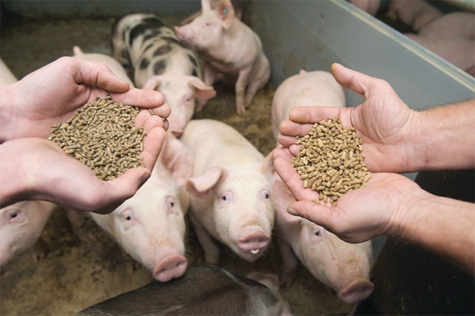
Lựa chọn thức ăn phù hợp giúp tiết kiệm chi phí chăn nuôi Ảnh: VVF
Địa điểm cho ăn
Khi cho gia súc, gia cầm ăn, cần đảm bảo thức ăn được sử dụng đồng đều cho vật nuôi, tránh hiện tượng vật nuôi ăn không đồng đều, dẫn đến còi cọc, chậm lớn, chú ý hạn chế thức ăn rơi ra ngoài.
Lượng thức ăn của từng đối tượng nuôi là khác nhau, lượng thức ăn hằng ngày còn phụ thuộc vào từng giai đoạn phát triển, từng loài, môi trường nuôi… Chọn thức ăn phù hợp vật nuôi: Thức ăn có nhiều dạng, dạng mảnh, dạng viên… Với heo và gia súc, thức ăn dạng lỏng, lượng ăn vào, tỷ lệ tăng trưởng và hiệu quả thức ăn nói chung được nâng cao so với hệ thống cho ăn khô, vì hệ thống thức ăn lỏng giúp tăng cường sức khỏe đường ruột hơn. Những tiến bộ trong phương pháp cho ăn thức ăn lỏng lên men, hứa hẹn duy trì một hệ vi sinh ổn định và mang lại nhiều lợi ích hơn cho hệ thống chăn nuôi. Với gia cầm, khi sử dụng thức ăn viên, nếu viên quá nhỏ sẽ dẫn đến tiêu tốn nhiều năng lượng, viên quá lớn sẽ khó ăn. Do đó, tùy độ tuổi của vật nuôi mà chọn loại thức ăn phù hợp.
Tần suất cho ăn phù hợp với độ tuổi của đối tượng nuôi. Khi vật nuôi còn nhỏ, có thể cho ăn nhiều bữa ăn nhỏ, khi lớn hơn tùy theo độ tuổi, có thể cho ăn các bữa chính, kèm theo thức ăn bổ sung phối trộn vào bữa ăn.
Bảo quản
Kho nguyên liệu, thức ăn xây dựng nơi cao ráo, thoáng mát, đầu gió, có mái không dột, xung quanh có cống rãnh thoát nước. Có lỗ thông gió, thông hơi, có quạt, kho kín có máy lạnh, máy hút ẩm, hoặc quạt thông gió. Nền kho cao 50 – 80 cm, dưới nền xây cuốn làm hầm để không khí lưu thông. Tường kho tráng xi măng chống thấm, không xây kho gần hồ, ao.
Để chuẩn bị nhập nguyên liệu và thức ăn dự trữ, cần dọn kho cho sạch sẽ, phun thuốc sát trùng như sunfat đồng 0,5%, dipterex 0,65% (ít dùng) hoặc nước vôi đặc để diệt vi khuẩn nấm mốc độc gây hại cho vật nuôi. Nếu kho đang có thức ăn dự trữ, cần định kỳ phun thuốc sát trùng diệt côn trùng, nấm mốc.
Nơi trữ thức ăn phải khô ráo, thoáng mát. Định kỳ khoảng 15 – 20 ngày thực hiện dọn dẹp, vệ sinh, sát trùng và diệt côn trùng.
Xe vận chuyển, dụng cụ ở kho phải vệ sinh sát trùng sạch sẽ. Lối vào kho có hố sát trùng đựng nước vôi đặc, tốt nhất là thuốc sát trùng crezyl 3%… Có dụng cụ cứu hỏa, có nước dập lửa khi xuất hiện sự cố.
Bao thức ăn phải để cao cách mặt nền và cách vách khoảng 30 – 40 cm. Ngăn chặn chuột, kiến, mọt, mối, gián… vào nơi trữ thức ăn. Cần chú ý những bao thức ăn bị rách (vì khả năng nhiễm nấm mốc sẽ cao). Không để những bao chứa thức ăn cũ (bao không) chung với nơi trữ thức ăn (vì rất dễ nhiễm nấm mốc từ bao không sang bao có thức ăn).
Bao, quây cót, silô chứa đựng nguyên liệu và thức ăn chế biến phải sạch, được khử trùng. Xếp bao đựng nguyên liệu, thức ăn theo lô, hàng cho từng loại riêng ở vị trí thích hợp, có lối đi lấy nguyên liệu, thức ăn sử dụng theo thứ tự trước dùng trước, sau dùng sau, và kiểm tra hàng ngày… Các loại nguyên liệu bột cá, khô dầu… cao đạm xếp nơi thoáng mát nhất; premix để ở phòng mát, phòng lạnh; thuốc bổ, vitamin… để phòng lạnh, tủ lạnh.
Nguyên liệu nhập vào kho phải khô, sạch, có độ ẩm phù hợp với quy định, thông thường khoảng 12 – 14%, loại những loại kém phẩm chất (mốc, mọt, ẩm…) không đạt tiêu chuẩn, kém vệ sinh, lẫn nhiều tạp chất, cát sạn….
Tuyệt đối không nhập nguyên liệu thức ăn từ vùng có dịch bệnh gia súc, gia cầm được công bố hoặc nguồn có thông tin tin cậy. Biện pháp tốt phòng nấm mốc là phải phun thuốc chống nấm như axit acetic… vào nguyên liệu trước khi nhập vào kho.
Có thẻ kho, ghi nhập xuất; ngày, loại nguyên liệu, thức ăn, nơi xuất nhập, số lượng, ghi chú chất lượng, số còn lại, tên người… để theo dõi kịp thời, đầy đủ.
Định kỳ đảo kho trên xuống dưới, trong ra ngoài cho nguyên liệu, thức ăn.
Thức ăn hỗn hợp, đậm đặc, bổ sung đã được chế biến không để bảo quản lâu trong kho; mùa hè 7 – 10 ngày, mùa đông 10 – 15 ngày, loại có bổ sung dầu mỡ để phòng lạnh có thể đến 15 ngày, để nơi thoáng 5 – 7 ngày.
Định kỳ vệ sinh hốt các hạt thức ăn rơi vãi trong kho, bởi chúng là nguồn phát triển của độc tố nấm mốc, gây ảnh hưởng đến sức khỏe vật nuôi.


